
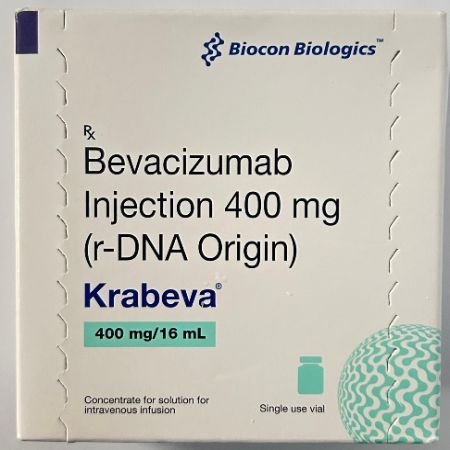
Krabeva 400 Injection
Brand Name: Krabeva 400mg Injection
International Trade Name: Avastin
Active Substance: Bevacizumab
Strength: 400mg
Category: Anti-Cancer
Manufacturer: Biocon
Pack: 1 Vial
Product Form: Injection
Description of Krabeva 400 (Bevacizumab 400 mg) injection
Krabeva 400 is a combination of bevacizumab, humanised monoclonal antibody designed as a recombinant protein oncologic therapy. Bevacizumab is a vascular endothelial growth factor (VEGF) inhibitor, which predominantly removes this important signalling molecule to promote endothelial cell secretion and motility, continuing the angiogenic pathway required in tumour vascularisation and neoplastic tissue provision of nutrients and oxygen. Incorporating into this signalling cascade, bevacizumab suppresses intratumoral neovascularisation which inhibits tumour progression and dispersal of metastasis.
Indications of Krabeva 400 (Bevacizumab 400 mg) injection
Bevacizumab is regularly included in treatment regimes of a range of solid malignancies, such as metastatic colorectal carcinoma (also known as secondary colorectal cancer or metastatic colon cancer), non-small cell lung cancer (NSCLC), glioblastoma, renal cell carcinoma, cervical carcinoma and ovarian carcinoma. It can be used alongside cytotoxic agents and special regimens are based on tumour histology and disease stage.
Mechanism of Action of Krabeva 400 (Bevacizumab 400 mg) injection
Bevacizumab is an antagonist of VEGF, which is a central mediator of angiogenesis, which constitutes the basis of developing new vessels and promoting the survival of tumour cells. Bevacizumab prevents the formation of new blood vessels by preventing the interactions between the VEGF and the endothelial cells by binding to VEGF. This blockade then reduces oxygen and nutrient supply to the tumour and growth is inhibited.
How to Consume Krabeva 400 (Bevacizumab 400 mg) injection
Bevacizumab is used as an infusion infused intravenously and monitored by trained medical personnel either in hospital or an oncology facility. The infusion is administered gradually within a given timeframe to reduce the risk of infusion related reactions. The treatment schedule and dosage depends on the body weight of the patient, type of tumour and response of the patient to the therapy and it is the oncologist, who decides the exact schedule.
Side Effects of Krabeva 400 (Bevacizumab 400 mg) injection
- Common side effects
- Hypertension
- Fatigue
- Headache
- Loss of appetite
- Mild nose bleeding
- Serious side effects
- Severe hypertension
- Perforation of the gastrointestinal tract
- Delayed wound healing
- Proteinuria
- Increased risk of bleeding
- Rare side effects
- Arterial thromboembolism
- Severe allergic reactions
Safety Advice for Krabeva 400 (Bevacizumab 400 mg) injection
Monitoring of patients under Bevacizumab treatment should exclude the laboratory examinations and blood pressure cheque, however, patient urine analysis and blood sugar testing should be regularly conducted.
Breastfeeding: It is possible that the medication is released into breast milk and therefore, the baby may suffer as a result; therefore, breastfeeding should be halted during the drug treatment.
Pregnancy: Bevacizumab is contraindicated in pregnancy since it may interfere with the development of the foetus.
Alcohol: The alcohol consumption should be minimised since it may aggravate fatigue and may further stress the hepatic functioning.
Liver: It is important to monitor the liver in case of patients who have a liver disorder
Lungs: The patient should report his/her any difficulty in breathing or chest pain to the doctor.
Kidney: The regular monitoring of kidney functioning and urine protein should be observed.
Driving: Fatigue and weakness: may occur, so the driving should not take place in the event that these effects come up.
Interaction of Krabeva 400 (Bevacizumab 400 mg) injection
- Drug–Drug Interaction
Sunitinib × Bevacizumab
Sunitinib is a tyrosine kinase inhibitor that also inhibits VEGF-signalling pathways and when used together with bevacizumab may cause uncontrolled inhibition effects on the vascular growth and hence aggravate the effects of angiogenesis. Such a combination may contribute to the development of serious vascular problems like thrombotic microangiopathy, acute high blood pressure and kidney damage. This is why it is advised to monitor blood pressure and kidney functioning closely in case of their combined use.
Warfarin × Bevacizumab
Anticoagulant therapy is warfarin which is used to prevent thrombo-incidents. Bevacizumab may also lead to bleeding risks due to the disruption of the process of vascular repair. Combination of these agents increases the risk of bleeding complications, such as, gastrointestinal haemorrhage, epistaxis, and internal haemorrhage. The combination requires paying closer attention to the coagulation parameters and clinical signs of bleeding.
Cisplatin × Bevacizumab
Cisplatin is a chemotherapeutic agent that is based on platinum and is used in combination regimens. The comorbidity of bevacizumab further increases the likelihood of renal toxicity, hypertension and vascular complications. The two agents may be involved in electrolyte imbalances and kidney damage.
Paclitaxel × Bevacizumab
Paclitaxel is an example of a microtubule-stabilising agent and chemotherapeutic which is used together with bevacizumab in various cancers. Although there can be synergistic therapeutic advantages, such a combination has some propensity to increase cases of neutropenia and associated infections as a result of bone marrow suppression.
Bevacizumab x Cyclophosphamide
The bone marrow activity is suppressed by cyclophosphamide, an alkylating anti-cancer agent. When used together with bevacizumab, there is an increased risk of bone marrow suppression, resulting in anaemia, leukopenia and thrombocytopenia, which increases infection risk.
- Drug–Food Interaction
Intravenous Bevacizumab is used, thus the food intake does not have any direct effect on its absorption. Nevertheless, a healthy diet is necessary when it comes to the treatment process in order to facilitate health and well-being. Hypertension is likely to develop in patients, or exacerbate the existing condition, so a restriction on the intake of excessive salt can often be recommended. Healthy food can be taken to alleviate exhaustion and keep the body strong throughout cancer treatment.
- Drug–Disease Interaction of Krabeva 400 (Bevacizumab 400 mg) injection
Hypertension
Another side effect of Bevacizumab that is one of the most prevalent is the blood pressure increase. The drug disrupts the vascular endothelial growth factor signal which is essential in sustaining the health and elasticity of blood vessels. Inhibition of this pathway causes the blood vessels to narrow causing high blood pressure. The hypertensive patients are especially vulnerable and might need the regular monitoring of blood pressure and antihypertensive therapy during the treatment.
Bleeding Disorders
The risk of bleeding is also likely to be increased by Bevacizumab since it disrupts the healing process of damaged blood vessels. Bleeding patients (haemophilia or thrombocytopenia) might worsen the symptoms. Some of the bleeding events can be nosebleed, gastrointestinal bleeding, or bleeding surgical wounds. This is the reason why patients who are known to have a tendency of bleeding need close monitoring during treatment.
Wound Healing
Angiogenesis of new blood vessels is a crucial component of the healing of a wound. Bevacizumab can slow down or inhibit wound healing since it inhibits angiogenesis. Recently operated patients can have wound reopening or delayed recovery as some of the complications. The recommendation that physicians usually give is that Bevacizumab should not be used within a specific period before and after major surgeries.
Kidney Disease
The effect of Bevacizumab is proteinuria or surplus protein in bodily fluids. This is possible since the drug has the capacity to influence the renal ability to philtre the kidneys. Kidney disease patients who are already diagnosed with it can develop deteriorated kidney functions during the treatment. Frequent urine analysis and monitoring of kidney functions are suggested to identify the initial symptoms of kidney damage.
Cardiovascular Disease
Bevacizumab can be dangerous when used with cardiovascular disorders patients. Thromboembolic incidents have been linked with the usage of the drug including stroke, heart attack, and blood clotting. Those who have a history of heart disease, vascular disease or clotting disorders are to be observed closely during the therapy.
Contraindication of Krabeva 400 (Bevacizumab 400 mg) injection
The contraindications include patients that have hypersensitivity to bevacizumab or its components. Other contraindications are related to pregnancy, critical uncontrolled hypertension, and active haemorrhagic conditions.
Dosage of Krabeva 400 (Bevacizumab 400 mg) injection
The dose that is administered is determined with regards to the weight of the patient, combined with the oncological indication. The drug is usually administered once in two or three weeks as a cycle of the treatment guided by skilled medical staff.
Storage of Krabeva 400 (Bevacizumab 400 mg) injection
The refrigerated conditions to store the vial must be in accordance with the conditions suggested by the manufacturer and the vial must not have been exposed to the extreme heat and light. The medication should not be stored anywhere before it can be utilised and should not be left in the reach of children.
Missed Dose of Krabeva 400 (Bevacizumab 400 mg) injection
With bevacizumab as a treatment that is conducted within a regulated healthcare environment, defaulting doses are uncommon. In case one of the doses is missed, the corresponding doctor will recalculate the dosing programme to take the break.
Other General Information of Krabeva 400 (Bevacizumab 400 mg) injection
The patients undergoing bevacizumab therapy are also encouraged to visit the clinic regularly following up to cheque the blood pressure and perform laboratory tests. It is necessary to report the symptoms that include persistent headaches, atypical bleeding, oedema, or respiratory discomfort in a timely manner. Physiological resilience in therapeutic intervention is promoted by adoption of balanced diet and hydration.
FAQs of Krabeva 400 (Bevacizumab 400 mg) injection
- What does it mean that Bevacizumab is considered an anti-angiogenic drug?
Bevacizumab is an anti-angiogenic agent that inhibits VEGF-VEGF receptor because it binds to vascular endothelial growth factor (VEGF). VEGF is also a major cytokine which stimulates the proliferation and migration of endothelial cells which are essential in the neovascularization process. Angiogenesis of new blood vessels is required to sustain the tumour growth with oxygen and nutrients, therefore, blocking the VEGF signal abbreviates the angiogenesis of the tumour, decreases blood flow within the tumour, and subsequently suppresses tumour growth.
- What is the reason why patients undergoing Bevacizumab should monitor their blood pressure regularly?
The effect of Bevacizumab on blocking VEGF signalling interferes with nitric-oxide mediated vasodilation resulting in vasoconstriction and increased peripheral vascular resistance. These changes in hemodynamics may trigger hypertension. Regular monitoring of the blood-pressure helps track an increase in the arterial pressure and allows the use of antihypertensive therapy in time and reducing cardiovascular risk.
- Does Bevacizumab have any influence in wound healing in post-surgery?
Yes. Bevacizumab inhibits the development of new capillaries required to develop granulation tissue and repair the wound by inhibiting VEGF-dependent angiogenesis. As a result, clinical practitioners have a tendency to delay the administration of Bevacizumab during the post-operative period to give sufficient time to tissue regeneration before therapy can be restarted.
- What is the rationale of using urine tests when using Bevacizumab?
Bevacizumab can affect the integrity of glomerular filtration barrier, which leads to proteinuria. Frequent urinalysis allows renal malfunction to be identified in time by measuring the amount of urinary protein being excreted in the urine, thus instructing the continuation of treatment or modification to avoid permanent renal injury.
- Does Bevacizumab go it alone or together with other cancer therapies?
Clinically, Bevacizumab is mostly used as a part of cytotoxic chemotherapy. The concomitant action of agents with different mechanisms of action is synergistic and leads to an increase in the overall antitumor therapy and potential disease management in a better way than with monotherapy.
- What are the symptoms that patients should report urgently when using Bevacizumab?
Patients are advised to report to their clinicians timely on the presence of such symptoms as severe cephalalgia, acute visual impairments, thoracic pain, persistent haemorrhage, dyspnea, or peripheral edoema. These symptoms can indicate severe unfavourable outcomes to be assessed with a doctor.
- Is Bevacizumab therapy associated with increased risk of blood clots?
Yes. Bevacizumab has been linked to a high rate of thromboembolic incidence that includes ischemic stroke and myocardial infarction. This is usually averted by subjecting patients with pre-existing cardiovascular disorders to increased monitoring during prescription.
Fact Box of Krabeva 400 (Bevacizumab 400 mg) injection
| Field | Details |
| Generic/Molecule Name | Bevacizumab |
| Therapeutic Class | Anti-neoplastic agent |
| Pharmacological Class | Monoclonal antibody / VEGF inhibitor |
| Dosage form | Injection |
| Habit forming | No |
| Indication | Colorectal cancer, lung cancer, renal cell carcinoma, glioblastoma |
References
- FDA Prescribing Information – Avastin (Bevacizumab)
https://www.accessdata.fda.gov/drugsatfda_docs/label/2023/125085s338lbl.pdf - National Cancer Institute – Bevacizumab
https://www.cancer.gov/about-cancer/treatment/drugs/bevacizumab - DrugBank – Bevacizumab
https://go.drugbank.com/drugs/DB00112 - European Medicines Agency – Avastin Product Information
https://www.ema.europa.eu/en/documents/product-information/avastin-epar-product-information_en.pdf



Reviews
There are no reviews yet.